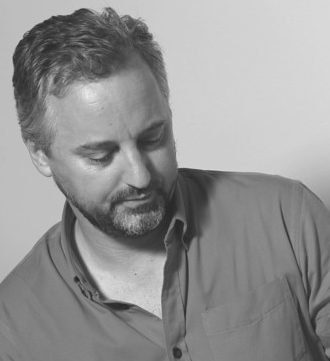
Richard E. Miller
I started teaching in 1984 when I was hired to work in the Learning Resource Center at Boston University’s College of Basic Studies. (The name has since changed.) The three years I spent at BU as a Math and Science Learning Skills Specialist fundamentally shaped my understanding of teaching as a creative act. Because I taught small classes where attendance was voluntary, I saw for the first time how radically different students’ ways of learning could be. And, because the people I taught with were very thoughtful about the social, political, and economic forces that come into play whenever a teacher and a student meet, I was prevented from confusing the successful transfer of content from one brain to another with real teaching.
During this time, I enrolled in the master’s program in English at UMASS-Boston, taking classes at night after I had finished with my teaching on the other side of town. At UMASS, I found my first intellectual home: I had teachers who changed the course of my life by modeling an approach to instruction that united rigorous compassion with a fearless commitment to radical inquiry. My classmates were high school teachers, guidance counselors, poets, dramatists, part-timers, full-timers, middle-aged, close to retirement, middle class or aspiring to be. Whatever our differences, the program encouraged us to see the relationship between literacy and power and the transformative effects of practicing interpretation as an art form.
After graduating, my partner and I moved to Pittsburgh, so I could continue my education in the Composition Program at the university there. Under the direction of David Bartholomae, who has since become my lifelong mentor and friend, I completed a dissertation on the dynamics of educational reform. (My revision, As If Learning Mattered: Reforming Higher Education was published by Cornell University Press in 1998.) At Pitt, I learned something about friendship I’d never known before: if you have friends who challenge your most fundamental beliefs, you will learn things about yourself and about the true value of friendship that can’t be learned in any other context.
I started teaching at Rutgers in the fall of 1993. I was involved with helping to run the writing program there during my time as an Assistant Professor. I got elected to chair the department shortly after I was promoted to Associate Professor. During my second term as chair, I published Writing at the End of the World (U Pitt, 2005) which explores the challenges involved in teaching when the future seems so bleak and the power of reading and writing to make a difference seems to be so negligible.
When I finished serving my second term as chair, I moved from teaching introductory writing classes to running large lecture-driven courses on apocalyptic literature and on the most contemporary of
Rethinking where I would do my teaching and where I wanted my writing to appear led to my fruitful collaboration with Ann Jurecic on Habits of the Creative Mind, our co-authored instructions for how to live a curiosity-driven life in the digital age. The second edition of Habits was published in September of 2019 and we’re just wrapping up work on the third edition, which will reflect our thoughts about writing and creativity after: George Floyd’s murder; COVID; the rise of White Christian Nationalism, the Insurrection, and the Supreme Court’s revocation of female bodily autonomy.
I have just completed a project that is, in some ways, the inverse of the project I pursued in On the End of Privacy. There I plunged into the digital world and followed my research wherever the Internet led me. In On Becoming a Writer, I work with an archive that exists only in paper and that can only be accessed by working with the original paper documents, which are in my possession. It’s a unique archive, one that I believe provides privileged access to
I have two grown daughters, of whom I am ridiculously proud. And, after having lived my whole teaching life within walking distance of my job, in 2018 my partner and I moved to a farm a stone’s throw from the Pennsylvania border. We are currently in the early stages of adding lavender and peonies to our main crop–hay.
I’ve written remembrances of three people who profoundly shaped my life. My mom, Elinor S. Miller. My dad, Warren C. Miller. And Jennifer Wilson, a teacher I met in China and knew for two short weeks.
And, finally, there’s Einstein, now gone, who was best memorialized by my youngest: “he was the fur-covered son you always wanted, but could never have.”

You must be logged in to post a comment.